
|

When to Prune
| The reasons Dave would suggest you prune a tree include: | ||||||||||
|

When to Remove
| Only in these situations would Dave recommend you remove a tree: | ||||||||
|
Earthworm Casting/Mineral Treatment
To help your trees and plants thrive and flourish, and to improve their endurance, Treewise is offering for sale to our tree-pruning/deadwooding customers, an Earthworm Casting/Mineral treatment. This product is a fully natural manure created by the African Night Crawler earthworm. It's high in beneficial bacteria, organic matter, humus, nitrate nitrogen, calcium, magnesium, phosphorus, and potassium. It appears/pours like soil and is easily absorbed into the ground. It's odorless and helps to retain moisture, which is especially beneficial when we have a hot, dry summer. You simply dump the product around a tree or group of plants, and water it in. It's pet friendly, and cannot burn a tree/plant, so there's no danger of applying too much product.
| The product is sold in ten-pound heavy-plastic bags with sort-of handles for ease of storage and transport. For those who are visual, ten pounds of this product would fill a three-gallon ice cream container. Pricing is as follows: | ||||||
|
| The recommended application for trees is: | ||||||
|
By giving your tree an Earthworm Casting/Mineral Treatment, you'll maximize the benefits achieved by Dave removing dead wood from your tree. You'll also help your tree maintain its health if Dave had to remove a large limb from the tree that grew as the result of a butchering (!) by an unskilled arborist or by a homeowner who was untrained in arboriculture or tree-climbing; or that you asked to be removed, because the limb was preventing sunlight from hitting your garden, or because it presented a liability to a passerby, or was in danger of damaging a nearby roof, fence, pool, etc.
If you're interested in purchasing the Earthworm Casting/Mineral Treatment, please advise us at the time you give us the go-ahead to proceed with your tree-work; this will ensure Dave brings the required number of bags of the product with him to your jobsite.
What Sets Us Apart
When a job involves high risk or hazard, Dave can be trusted to complete the job successfully, eliminating the property owner's anxiety and distress along the way.
Even those jobs that may seem straightforward to the novice must be considered with judgment and good sense. Dave takes into account the health of a tree, its size, its growth rate, its placement on a property, its encroachment on a neighbor's property, whether or not the tree is preventing sunlight from reaching a garden or window, etc., and after careful study, will recommend the pruning or removal required to meet the property owner's (and the tree's!) needs. Dave has been known to refuse a job because the implications of the work being requested are not in the best interest of the property or the tree.
Dave is treewise!
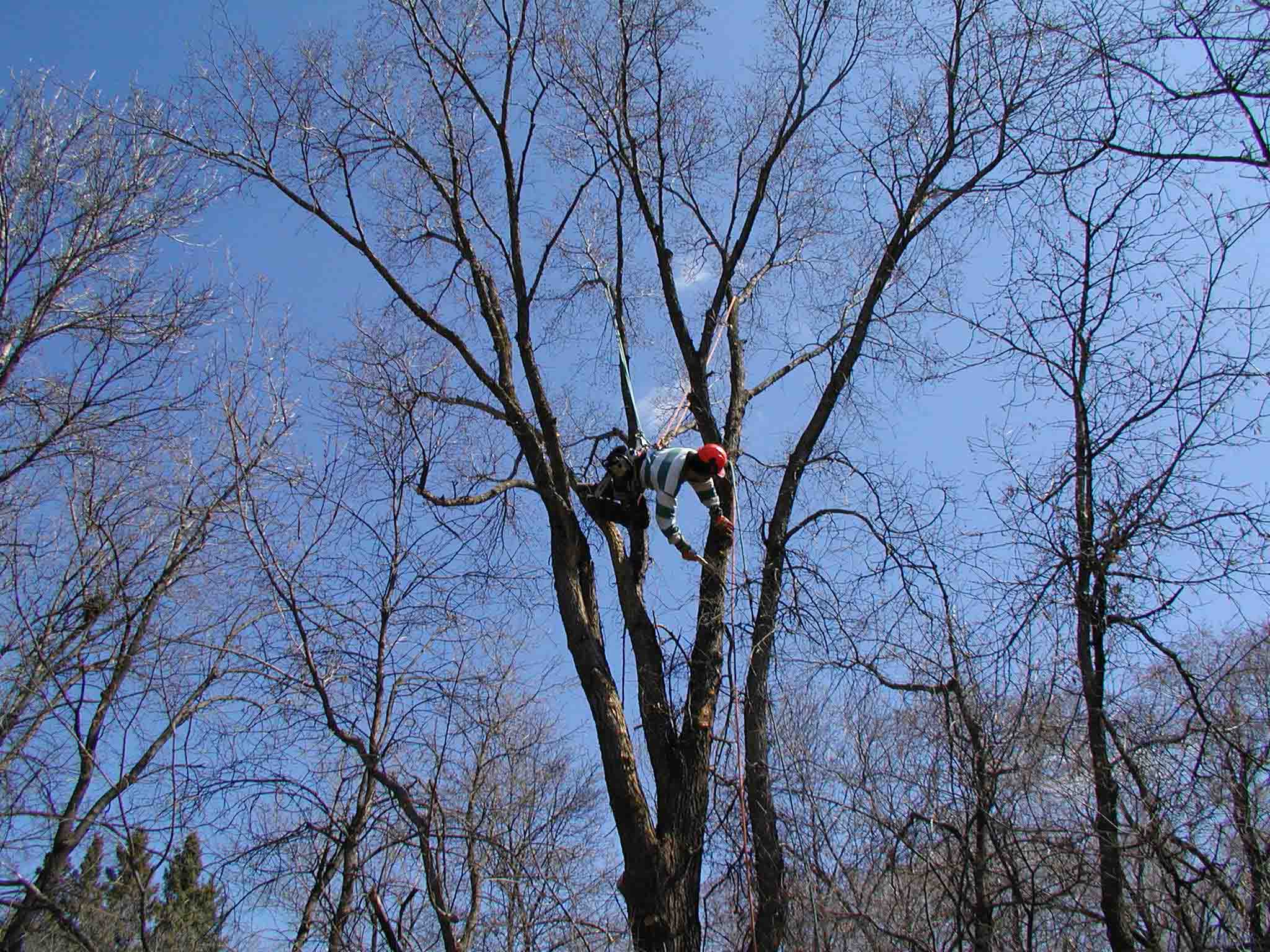
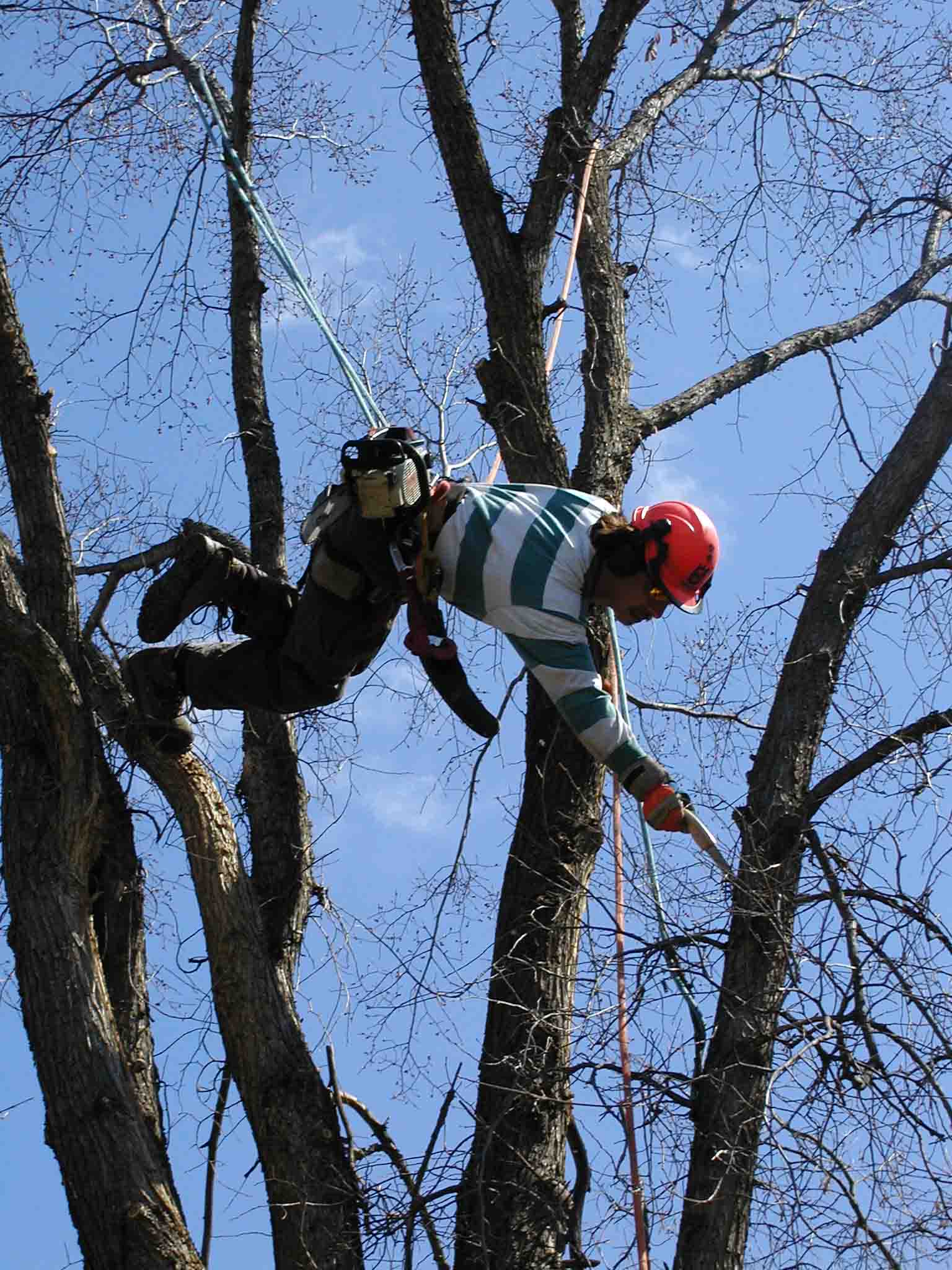
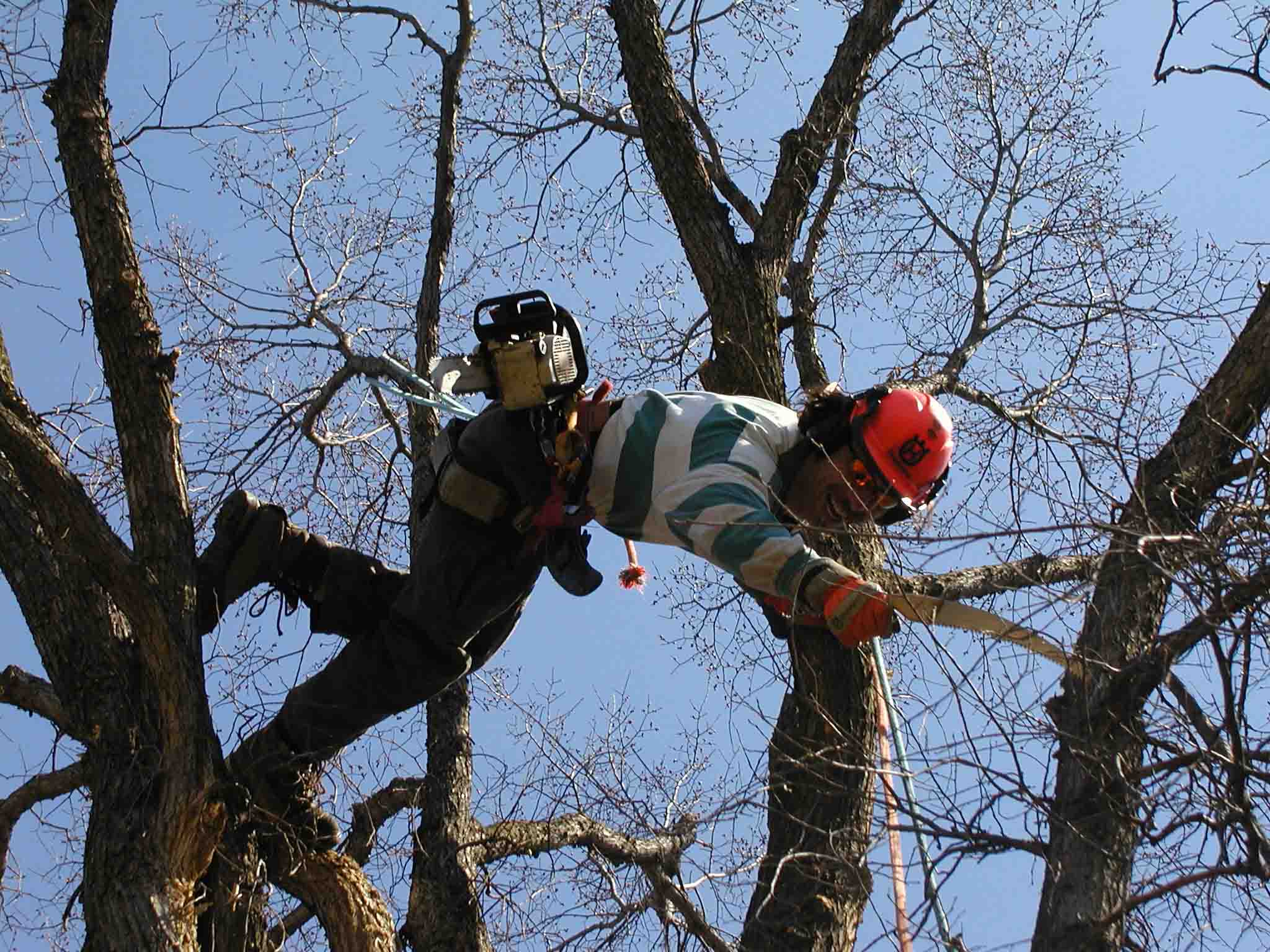
Although Dave's customers are routinely mesmerized as they watch him climb a 100 ft tree quickly and effortlessly, more importantly, they know him to be an expert who can be wholly trusted to prune their tree with care and concern for the aesthetics of their tree and its health. And when a tree has, unfortunately, died or become unwieldy due to its growing-location, customers call Dave, confident he will cautiously and capably remove the tree, knowing they need not worry about damage to their property occurring during the removal process.
Dave's expertise in executing a flawless tree removal was recently discussed in a local magazine. The most discerning gardeners trust Dave to remove a tree without concern for their manicured lawn or picturesque perennial garden below.
 |
Click here to see the article. |
Some customers are keen to explore the ultimate approach to removing a tree. They've planted a tree -- often it's a poplar that has grown far faster and bigger than they ever imagined -- and now they regrettably have to remove it. When time is short and money isn't (we have to be honest!), Dave works with a local crane company to get the job done. He uses his judgment to decide where, on each of the major stems, the crane's hook should be placed. He attaches the hook, he notches the tree in a carefully selected spot, and after a gentle pull from the crane and a push from Dave, onlookers witness a stem weighing thousands of pounds swing through the air enroute to the street below. A few minutes later, passersby see a tree that once towered above a house laying at the edge of the owner's property. If you are interested in a crane-assisted removal, return to the main page and click on "Commercial Services", then scroll down until you find two sets of pictures of crane jobs.
Lucky for the rest of us (who prefer and can better afford a less extravagant approach to removing a tree), we can rely on Dave's expertise to complete the job with no disruption to our yard, lawn, or flowers.
Droop-lining
A few years ago, Dave devised an innovative rigging technique known as droop-lining that allows him to lower huge limbs of a tree gently to the ground without causing damage to the landscaping or buildings below. You can imagine the damage a 300 pound log could do to a lawn when thrown from 100 feet in the air. Dave's advanced rigging technique ensures such needless damage need not occur. It also allows him to manipulate large pieces of wood in tight spaces and difficult places. In recognition of its benefits, Dave's innovative droop-lining technique is now used by arborists throughout the industry. It's a superb solution for preventing damage to buildings, fences, gazebos, landscaping, and other valuable or irreplaceable property-assets.
|
Click here to see how Dave's rigging technique is the secret to a no-damage, no-mess removal! |
| (Special thanks to Alice on Bannerman Ave for her interest and initiative in taking these great pictures as she watched a former 'friend' in her neighbor's yard be dismantled...) |
Dave has worked extensively with the local arborist community to promote increased safety and education in work techniques, and he is well known by those involved with the Coalition to Save the Elms. He is an active ISA (International Society of Arborists) chapter member, an ISA certified tree worker/climber specialist, a licensed Manitoba arborist, and an Arbormaster training graduate.
 |
 |
 |
Many tree pruners do not possess Dave's love of trees or his background in the tree care industry. Such people don't mind heights, but they don't have that sixth sense -- that understanding and awareness of how a tree can dramatically cut down on neighborhood and street noise, add to a property's value, engender calmness as one quietly walks beneath its rustling leaves, or strike you with its majestic beauty.
We've all seen examples of 'butchered' trees and have been horrified by them. Property owners can be assured that Dave will never subject a tree to such appalling abuse. Dave is in the tree-care business because he loves trees. To him, climbing in trees, working with them -- it's not just a job, it's his life.
Treewise at the Beaches!
|
Click here to learn about Treewise at the Beaches! |
|